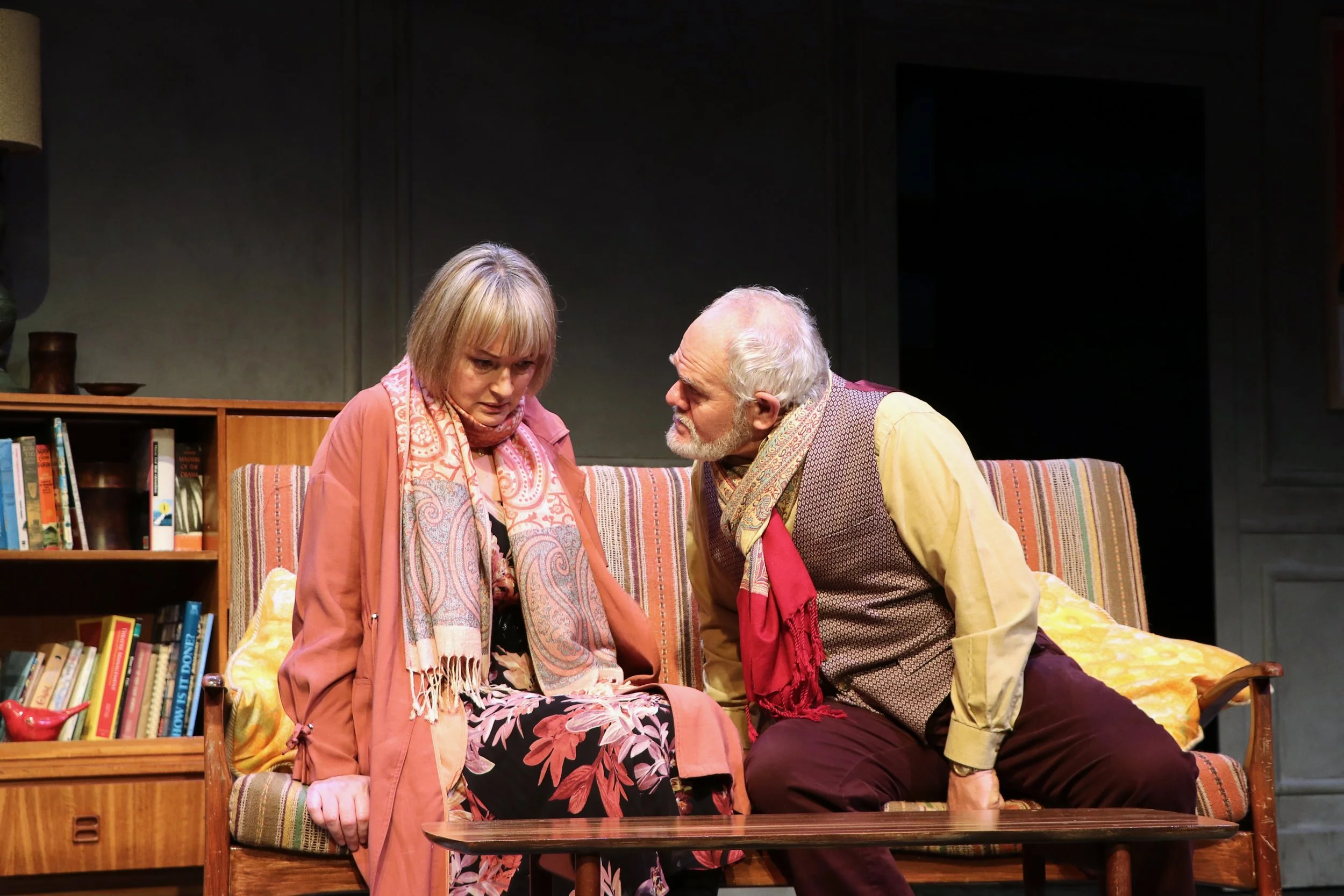
THE FATHER
By Florian Zeller
Court Theatre · 2019
Precision, trust and the architecture of memory.
Trust, risk and performance
At the centre of The Father were lead actors Mark Hadlow and Luanne Gordon.
Mark and I forged a strong partnership as we explored the play. We both wanted the same thing: to be as truthful as possible and to do this extraordinary writing justice.
Mark is perhaps best known for his comic work. It was wonderful to watch him embrace a role of such seriousness and complexity, with enormous dedication and fine judgement.
But the relationship between Mark and Luanne was at the heart of the production.
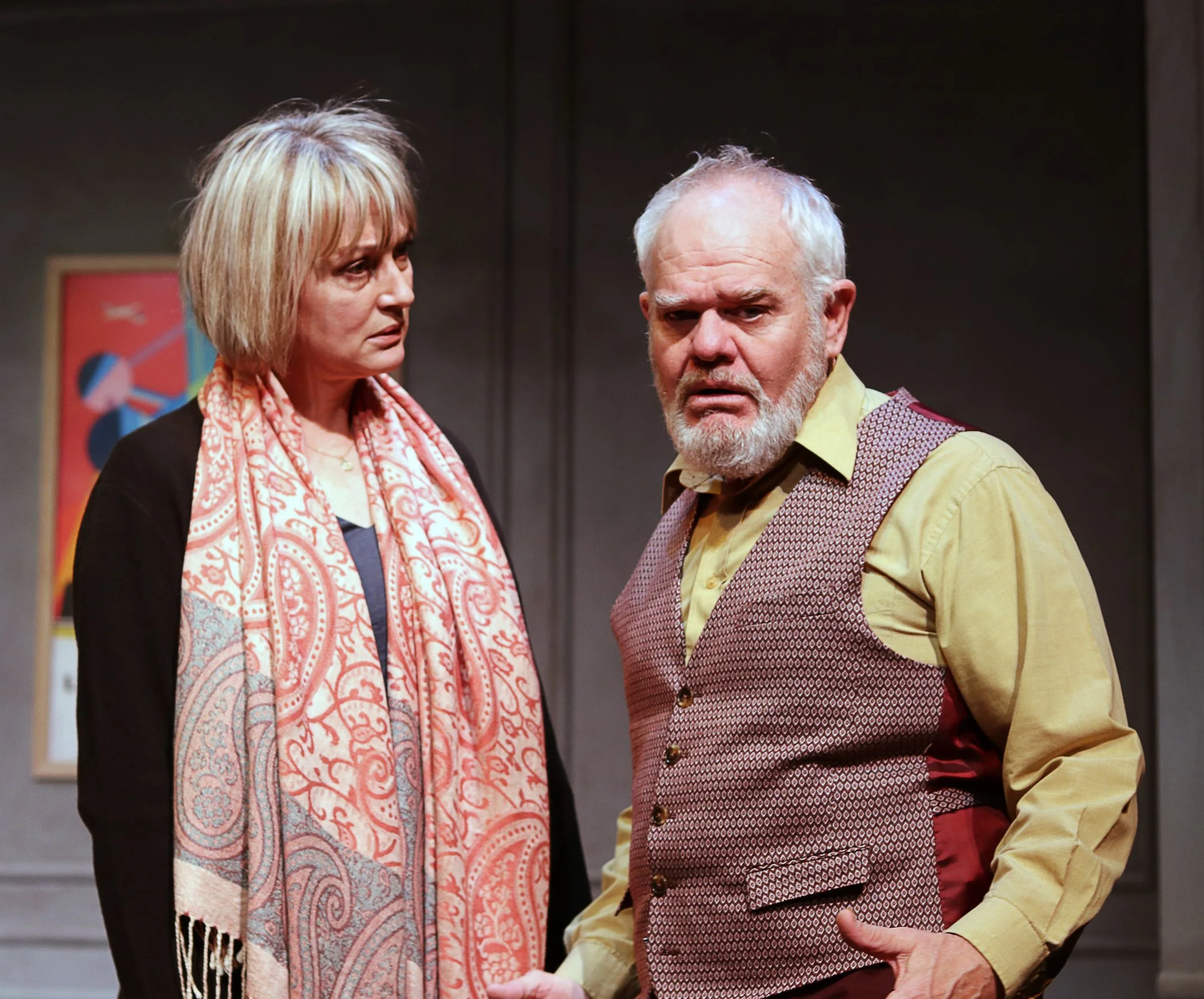
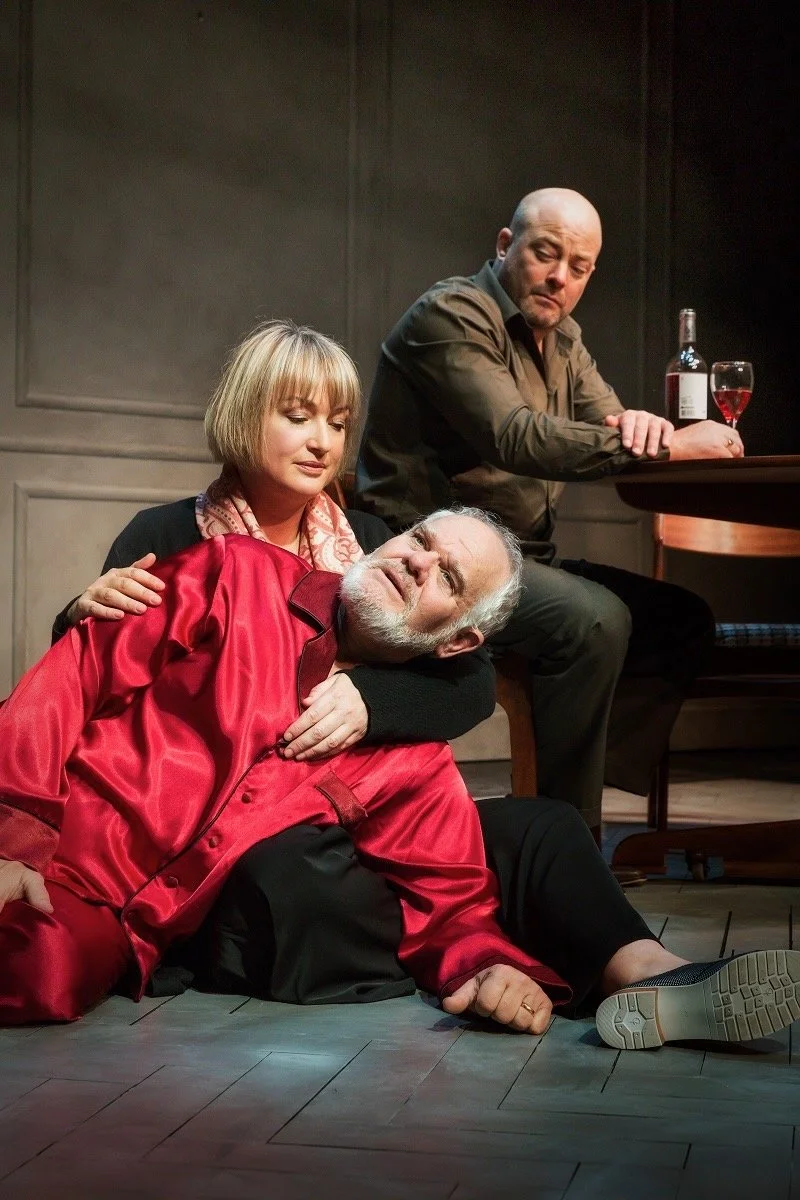
They built something together that felt utterly lived-in — the frustration, affection, exhaustion and love between a father and daughter who can no longer quite reach one another.
Those performances could only have been developed in a room where there was deep trust, and a willingness to take risks.
Luanne Gordon, Mark Hadlow and Tom Trevella
The world falls away
The Father is a play in which the environment is part of the storytelling.
André's world begins as a recognisable, comfortably furnished Parisian apartment. But as his dementia progresses, that world becomes increasingly unstable. Rooms change. Objects disappear. People become unfamiliar. Eventually, almost everything has been stripped away.
I wanted those changes to happen without announcing themselves.
I don't like scene changes where the play stops. I choreograph transitions so that one scene overlaps with the next, allowing the storytelling to continue even as the physical world changes.
Here, cast members quietly removed paintings and furniture as the play progressed. The warmth of the apartment gradually disappeared. The lighting became colder. The upstage wall could move, revealing a dark space behind it — a physical image of the abyss André increasingly fears.
Hamish Oliver's music was another part of this architecture, making the confusion and psychic pain tangible without telling the audience what to feel.
The design wasn't there to illustrate dementia.
It was there to make André's experience of the world physical.
Quiet, but precise
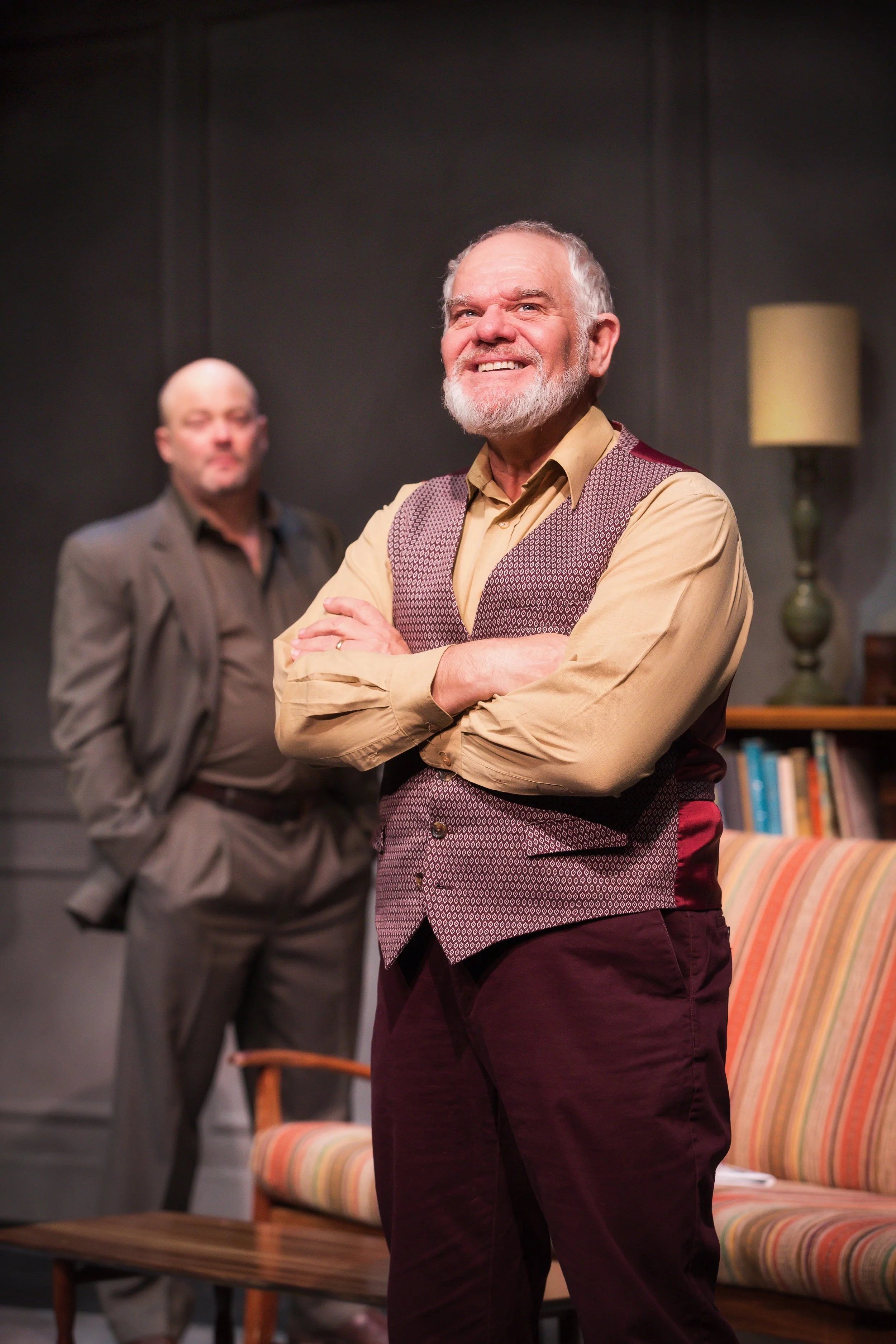
Tom Trevella and Mark Hadlow
One visitor who watched a day's rehearsal described my approach as “surgical.”
I think that's probably right.
My role on The Father was to be quiet, but precise: asking questions when necessary, guiding the actors' discoveries, and trusting the writing.
The play didn't need a director imposing an interpretation on it. Florian Zeller's writing was already doing something extraordinarily sophisticated. My job was to understand its architecture, identify where its layers needed clarity, and make sure we didn't obscure what was already there.
That required a particular kind of trust — in the text, in the actors, and in the process.
I discovered a completely new group of actors at The Court Theatre, as well as new designers and composer. I was working away from home, in a theatre where I literally didn't know anyone. The experience was joyful: the company was receptive, supportive and trusting.
It gave me considerable confidence in my ability to walk into an unfamiliar room and build the conditions for good work.
And it reinforced something I have come to believe more strongly over time:
Precision doesn't mean control.
It means knowing what matters.
Less is more
The Father reinforced three principles that have informed all my work:
Less is more.
Content dictates form.
God is in the details.
The production didn't need to explain André's experience. It needed to create the conditions for the audience to experience it.
The writing was precise. The performances were precise. The changes to the world around André were precise. Every detail mattered because every detail contributed to the audience's understanding — or uncertainty — about what was real.
That was the discipline of the production: knowing what to leave alone.
For me, directing isn't about adding ideas to a piece simply to make your mark on it. Sometimes the most important thing a director can do is recognise what is already there, understand why it works, and create the conditions for it to be fully realised.
The Father was a prime example of all three principles at work.
Humour, compassion and humanity
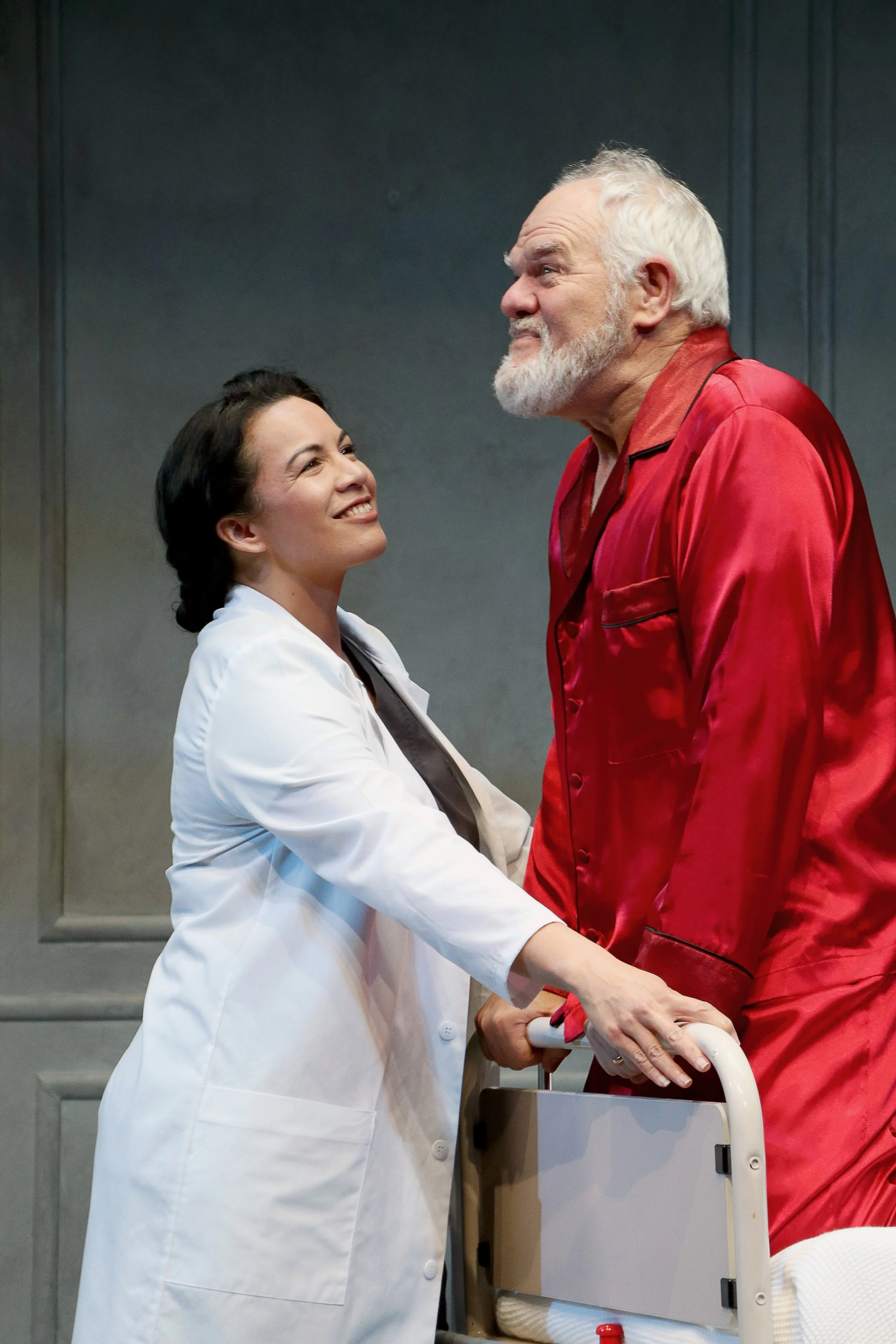
Kim Garrett and Mark Hadlow
I didn't want The Father to be relentlessly grim.
André can be funny. He can be charming. There is warmth and playfulness in his relationships, even as the world around him becomes increasingly incomprehensible.
That balance mattered to me.
I believe tragic events are often more powerful when they are counterpointed by humour, love and ordinary human connection. The audience needs somewhere to breathe — and, more importantly, those moments remind us that André is a person, not an embodiment of dementia.
A reviewer described the production as being undertaken with “humour, compassion and humanity”, and said it illuminated experiences that are too often left unexpressed. (Lindsay Clark, 2019)
That feels very close to what I hoped we had achieved.
In hindsight, The Father sits among the productions I am most satisfied with — alongside Into the Woods and A Midsummer Night's Dream.
Three very different shows.
Each deeply satisfying, for different reasons.
The Father by Florian Zeller
Court Theatre · August 2019
Credits:
Director
Simon Bennett
Set Design
Nigel Kerr
Lighting Design
Giles Tanner
Costume Design
Deborah Moore
Original Music
Hamish Oliver
Cast
Mark Hadlow · Luanne Gordon · Ailis Oliver-Kerby · Kim Garrett · Owen Black · Tom Trevella