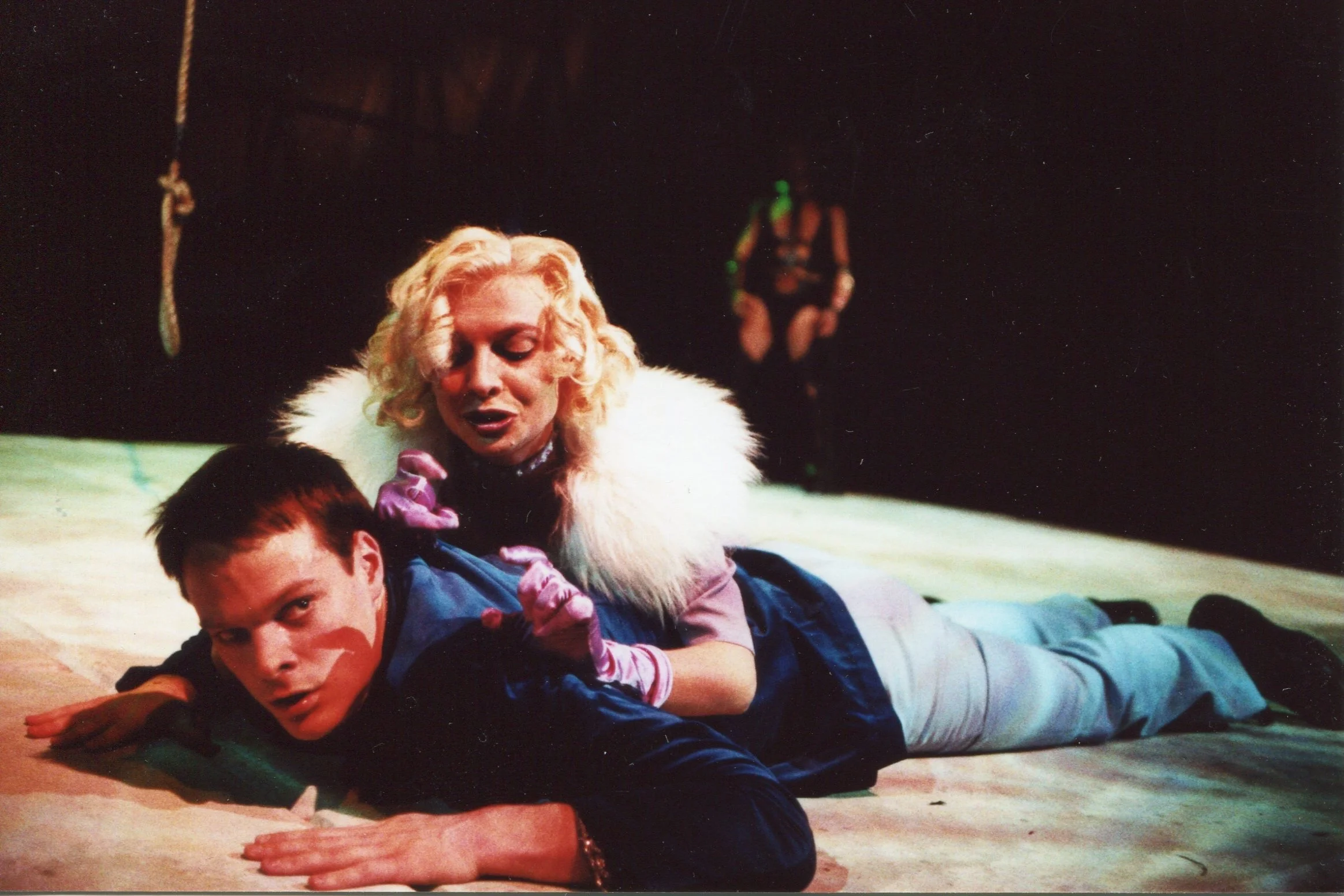
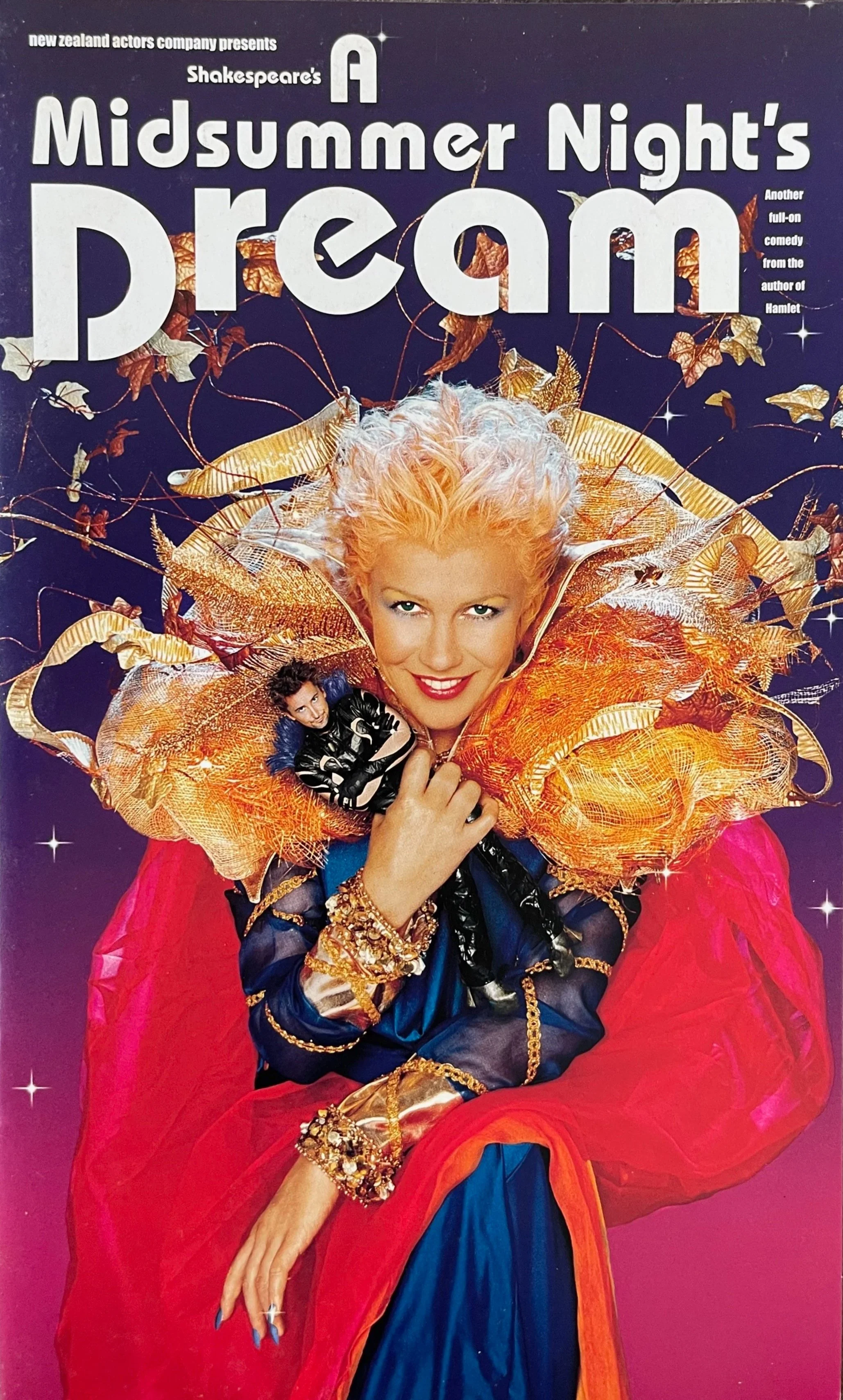
A Midsummer Night’s Dream
William Shakespeare
The opposite of staid and dull and boring
New Zealand Actors’ Company · 2000 / 2001
Scroll ↓
TAKING SHAKESPEARE ON THE ROAD
In 2000, I joined actors Tim Balme, Robyn Malcolm and Katie Wolfe to establish the New Zealand Actors' Company.
The goal was simple but unusual: take ambitious, properly resourced theatre beyond the main centres.
New Zealand's small population made large-scale theatre difficult to sustain in a single city. Touring offered another possibility — build a production with the time, cast and resources it deserved, then take it to audiences across the country.
The company wanted to make theatre that was accessible, unpretentious, compelling and of the highest quality. It was a kind of grown-up version of the BATS philosophy — theatre with the energy and immediacy of a rock concert, rather than something remote or precious.
SHAKESPEARE AS IF FOR THE FIRST TIME
I approach Shakespeare as if the play has never been performed before.
With Dream, I wasn’t interested in reproducing somebody else's Shakespeare. I wanted to discover what happens when this text meets these actors, these designers and this audience.
I'm looking for energy and excitement and surprise and theatricality — the opposite of Shakespeare as something staid, dull and historical. The language remains absolutely central, but we meticulously excavate the text, discovering springboards for play, physicality and the imaginations of the ensemble.
I don't believe originality has to be imposed on a classic. It is usually already there, waiting to be found.
That is where freshness comes from: not from trying to be different for its own sake, but from genuinely encountering the work.
A PHYSICAL SPACE
Falling, fighting, climbing, rough and tumble…
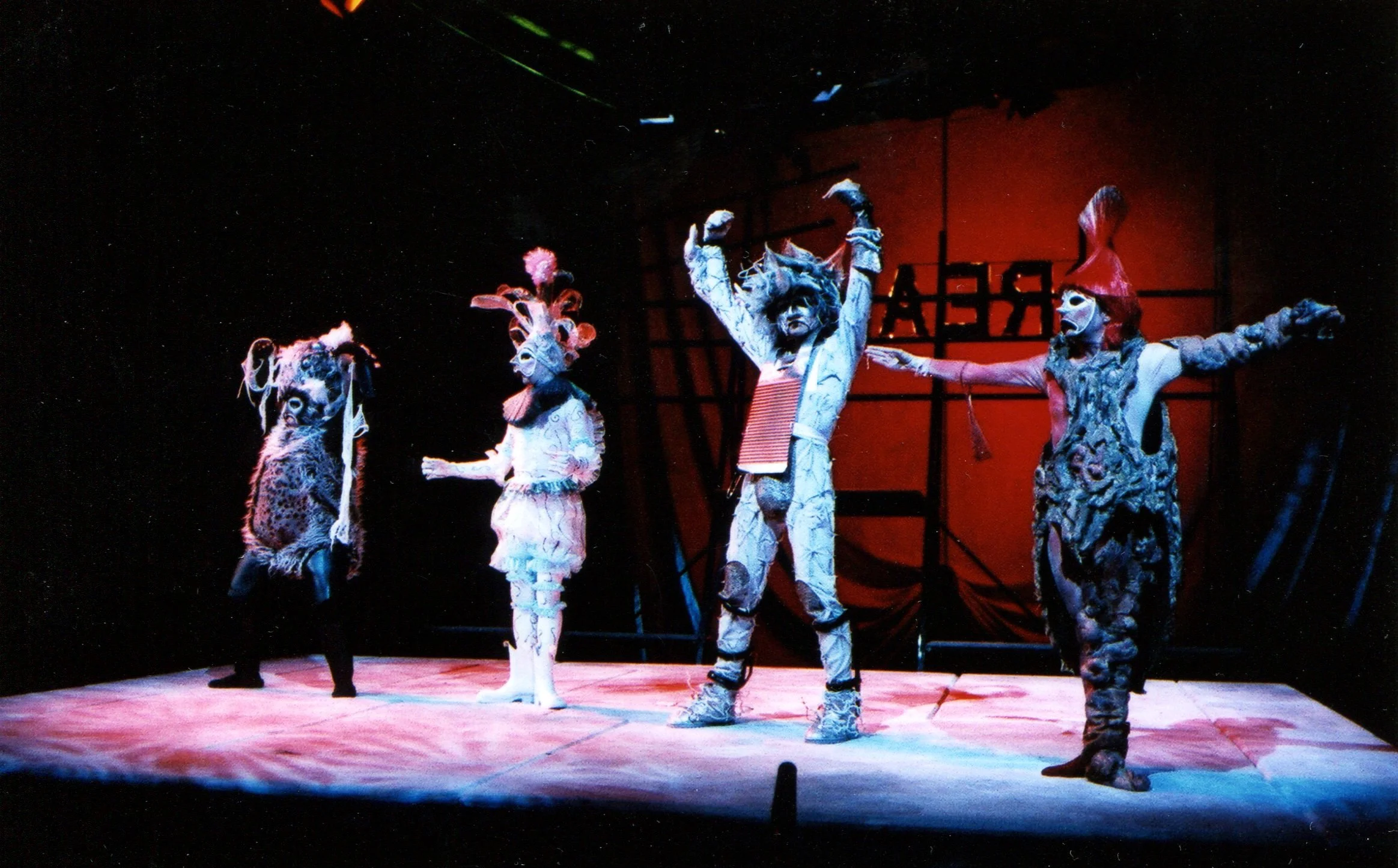
Mark McEntyre's abstract, versatile set was distinctly Shakespearean in spirit, giving the actors — in Tracey Collins’ eclectic costumes — the freedom to play with intense and surprising physicality.
The stage was built like a boxing ring: a raked, padded platform with scaffolding, levels and a trapdoor at its centre. The same structure existed in the rehearsal room, so the physical language of the production developed from the beginning.
Tracey Collins’ costumes gave each world its own visual language.
THREE WORLDS
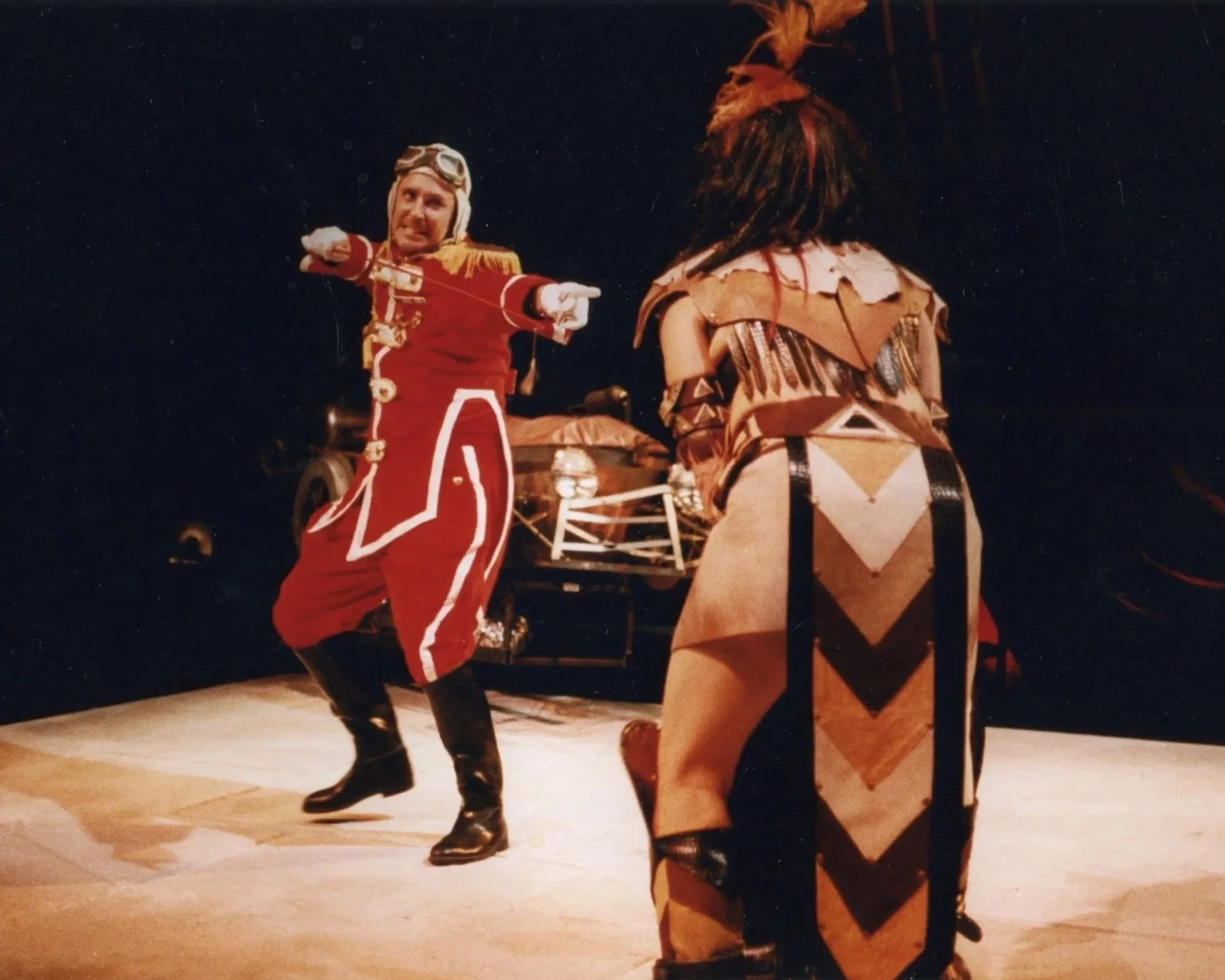
THE COURT
Order, desire and the rules of the waking world.
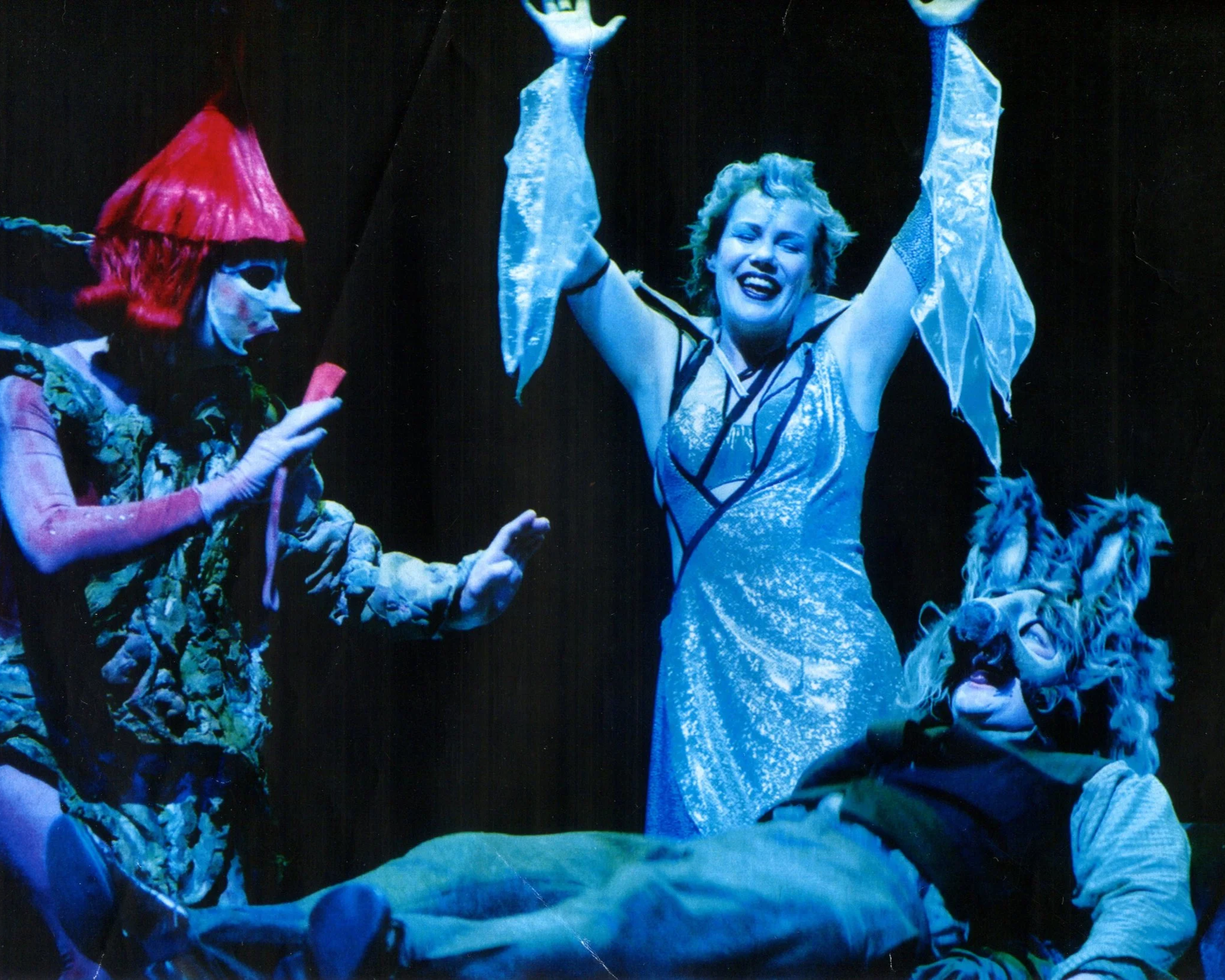
THE FAIRIES
A stranger, darker world — closer to pagan magic than storybook fantasy.
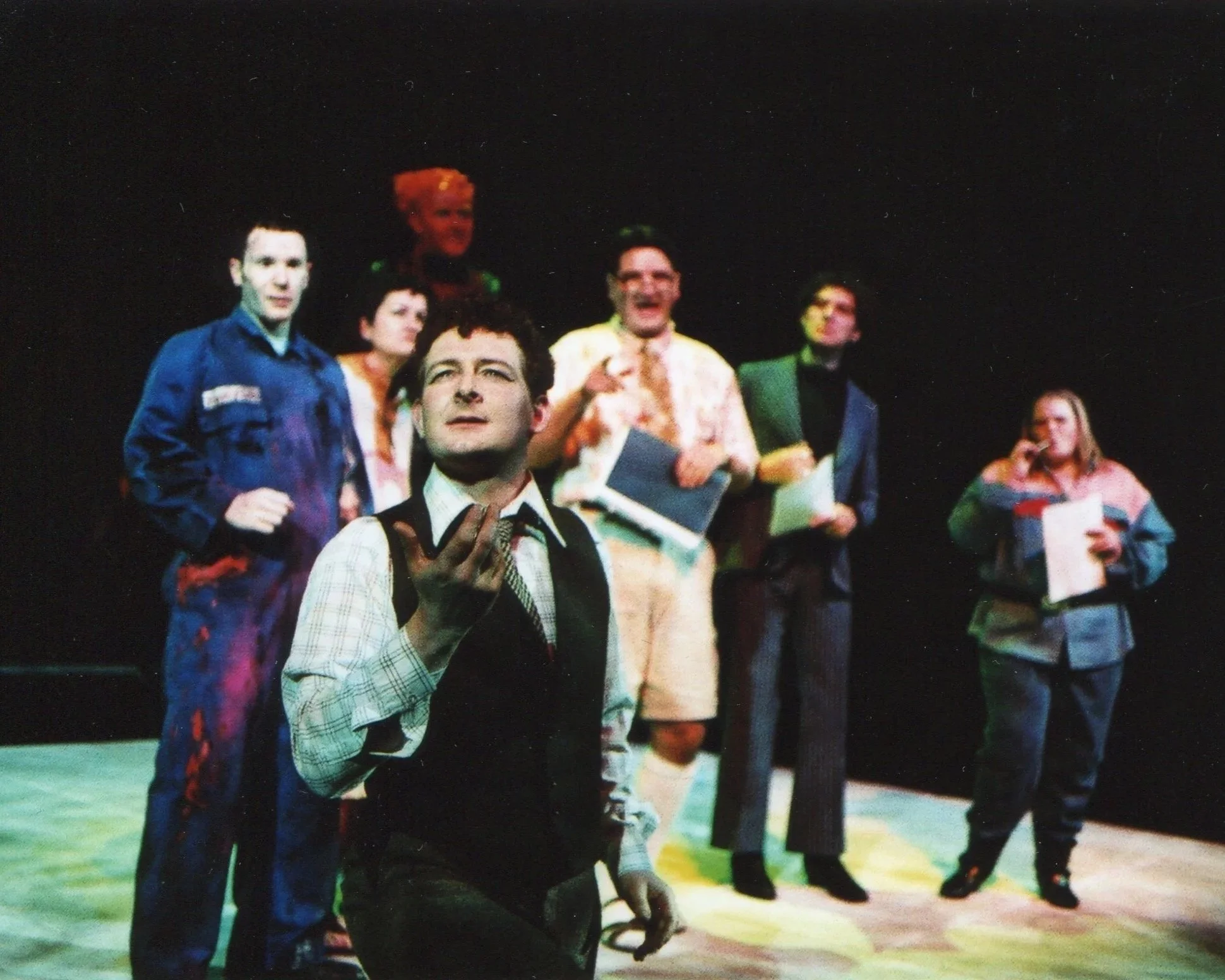
THE MECHANICALS
The earthy, recognisable world of workmen and players.
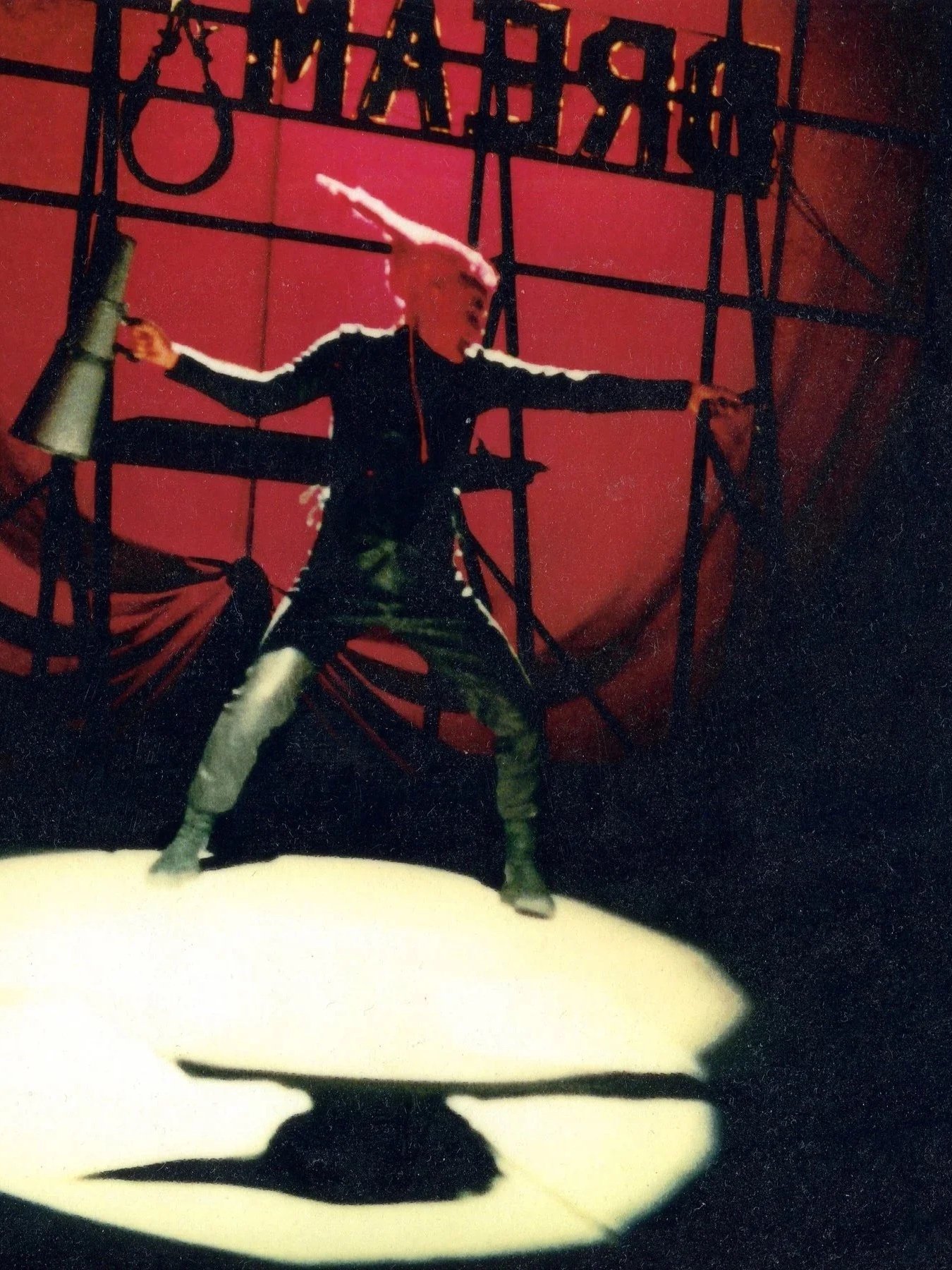
PUCK IS FAST. AND PUCK IS A DEVIL.
PUCK
Stephen Lovatt and I explored Puck via the pagan figure of Robin Goodfellow — not a cute fairy, but a mischievous, unsettling creature with something demonic about him.
The red headpiece was inspired by a racing-cyclist's helmet. Puck is fast: physically, theatrically, and in the way his imagination seems to move ahead of everyone around him.
That speed became part of the character's physical language. Playful and mischievous, but always something dangerous beneath the play. Puck delights in the chaos he creates because, unlike the mortals trapped inside it, he understands the rules of the game.
AN ENSEMBLE COMMITTED TO PLAY
“The most interesting process I have worked with.”
Tracey Collins, Costume Designer
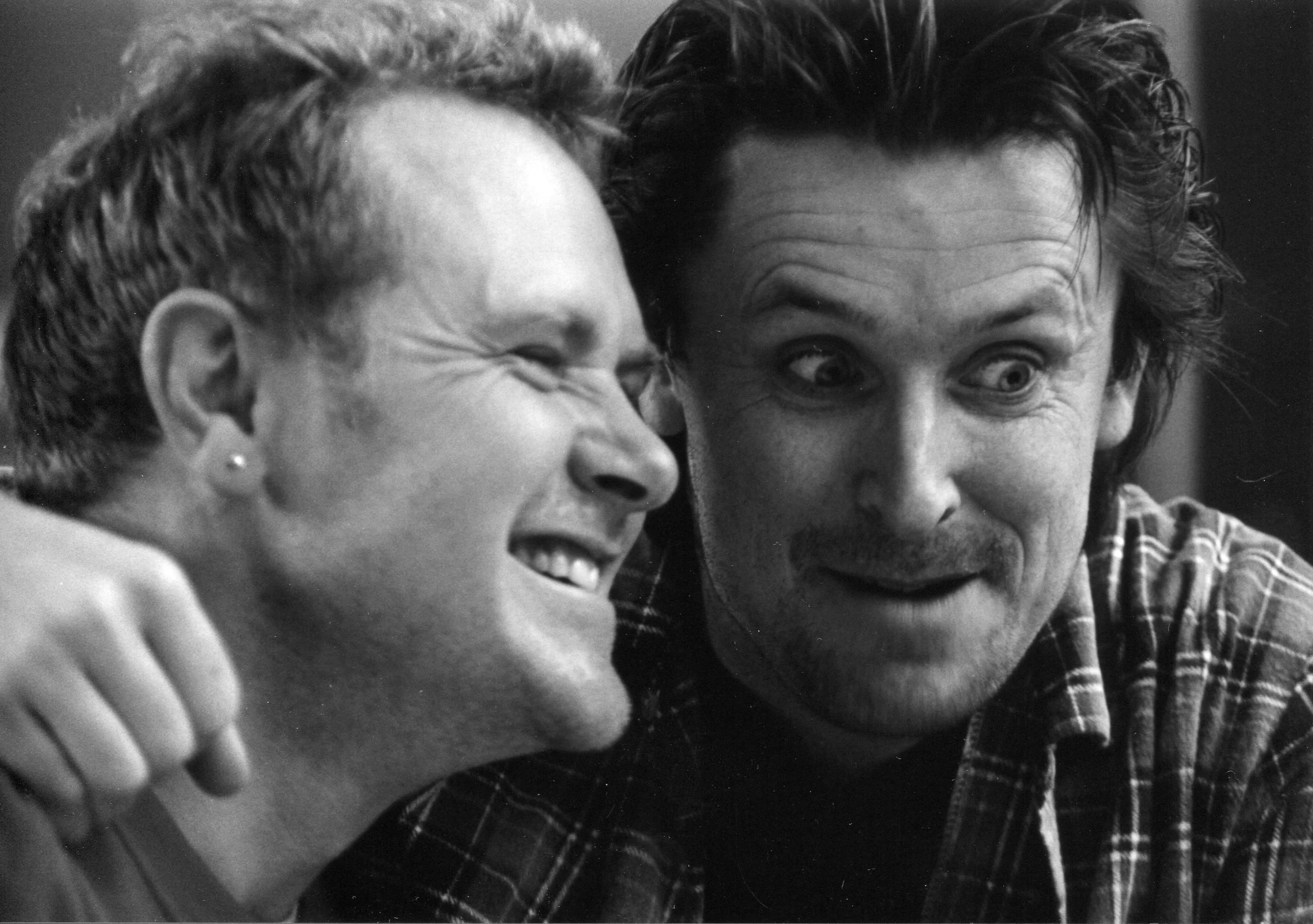
Stephen Lovatt and Tim Balme
My approach to rehearsal owes much to English director Mike Alfreds: creating the conditions in which actors can play, take risks and discover things that nobody in the room could have planned in advance.
Dream had five weeks to do that. And it had a cast willing to embrace the process.
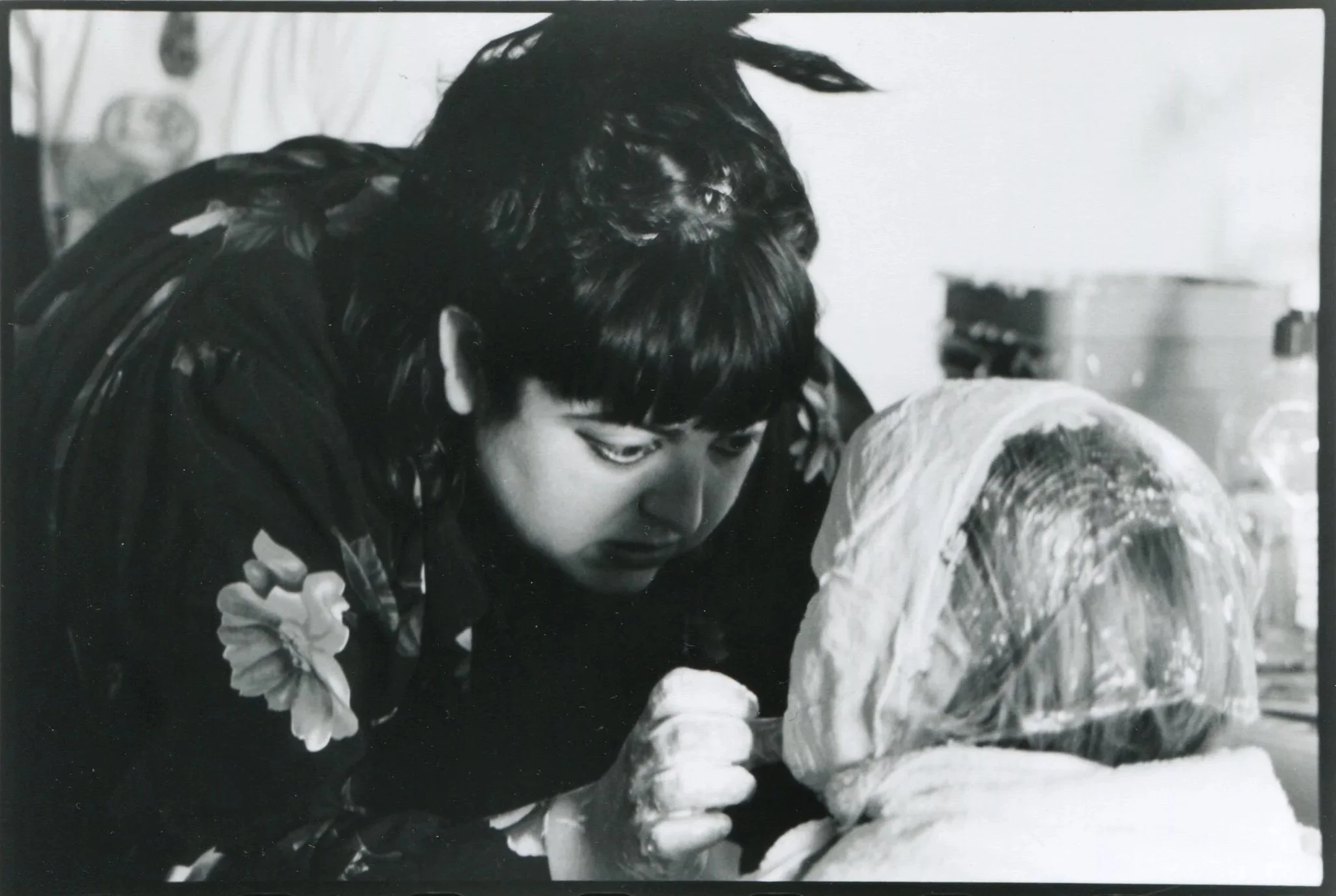
Tracey Collins casting Lucy’s face for her Cobweb mask
Time to explore Shakespeare's text without rushing towards a predetermined result. We worked intensively with the language, using Cicely Berry's exercises to unlock its rhythm, thought and physical life.
We also built the world of the play physically. Shona McCullagh worked with us on choreography — from the Lovers' tango to the Mechanicals' square dance.
Five weeks’ rehearsal gave us something increasingly rare: time.
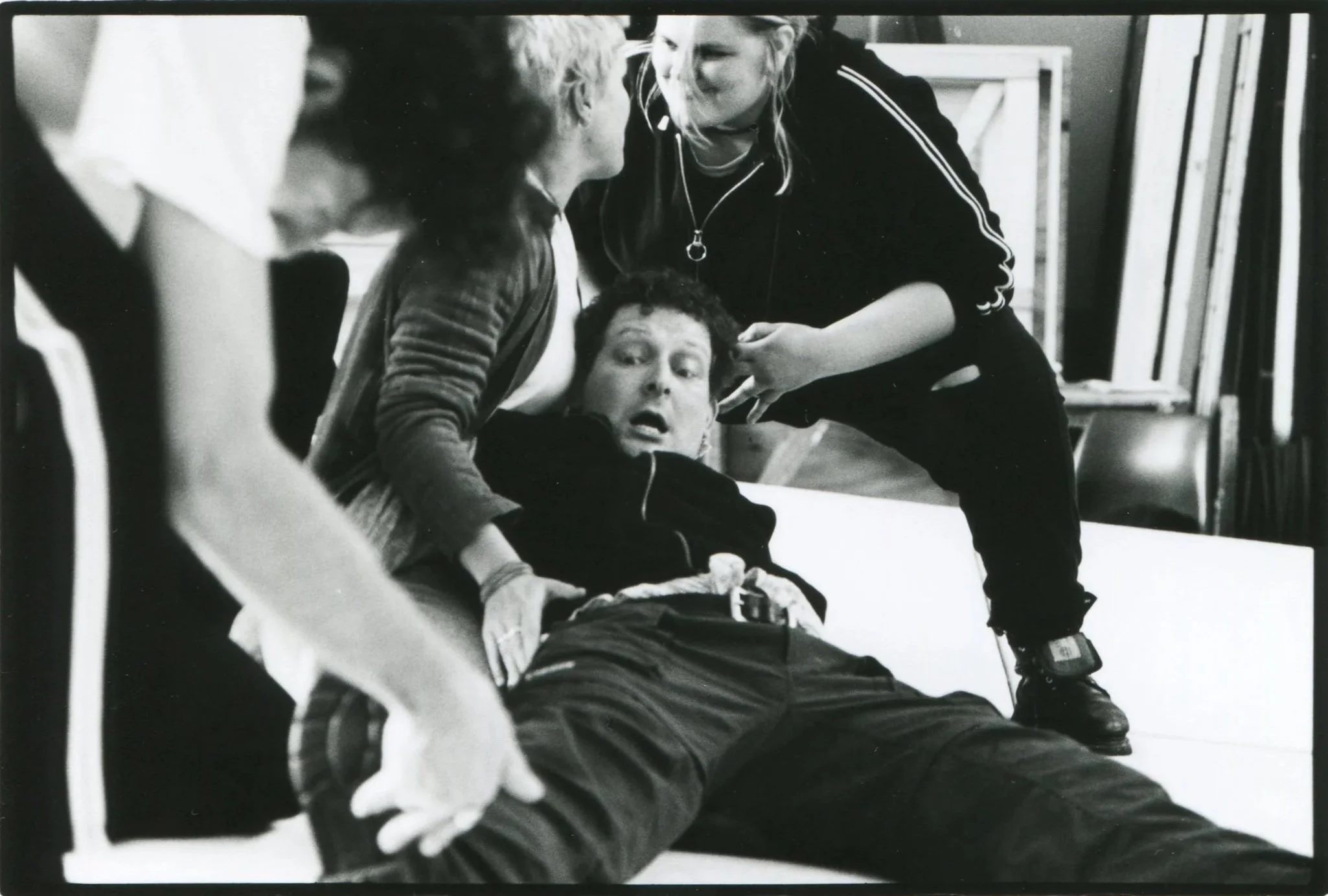
Cameron Rhodes, Lucy Schmidt, Robyn Malcolm
THE WORLD WAS MADE TOGETHER
Tracey Collins' design wasn't simply something the actors stepped into. Costumes, masks and physical character grew alongside the performers in rehearsal.
A MIDSUMMER NIGHT’S DREAM
The show meets its audience
The five weeks of excavation ultimately had to become something immediate, physical and compelling: Shakespeare's language, the actors, the music, choreography and design all working together in performance.
The response suggested that the experiment had worked. The first North Island tour was a major success, playing large venues around the country and attracting audiences that included many people who rarely went to the theatre. Dream was the New Zealand Actors' Company’s first production — and it took the work to audiences around the country.
“This is living, breathing, shouting, screaming, vital, bloody, lusty, hilarious theatre.”
Hawke’s Bay Today, 18 August 2000.
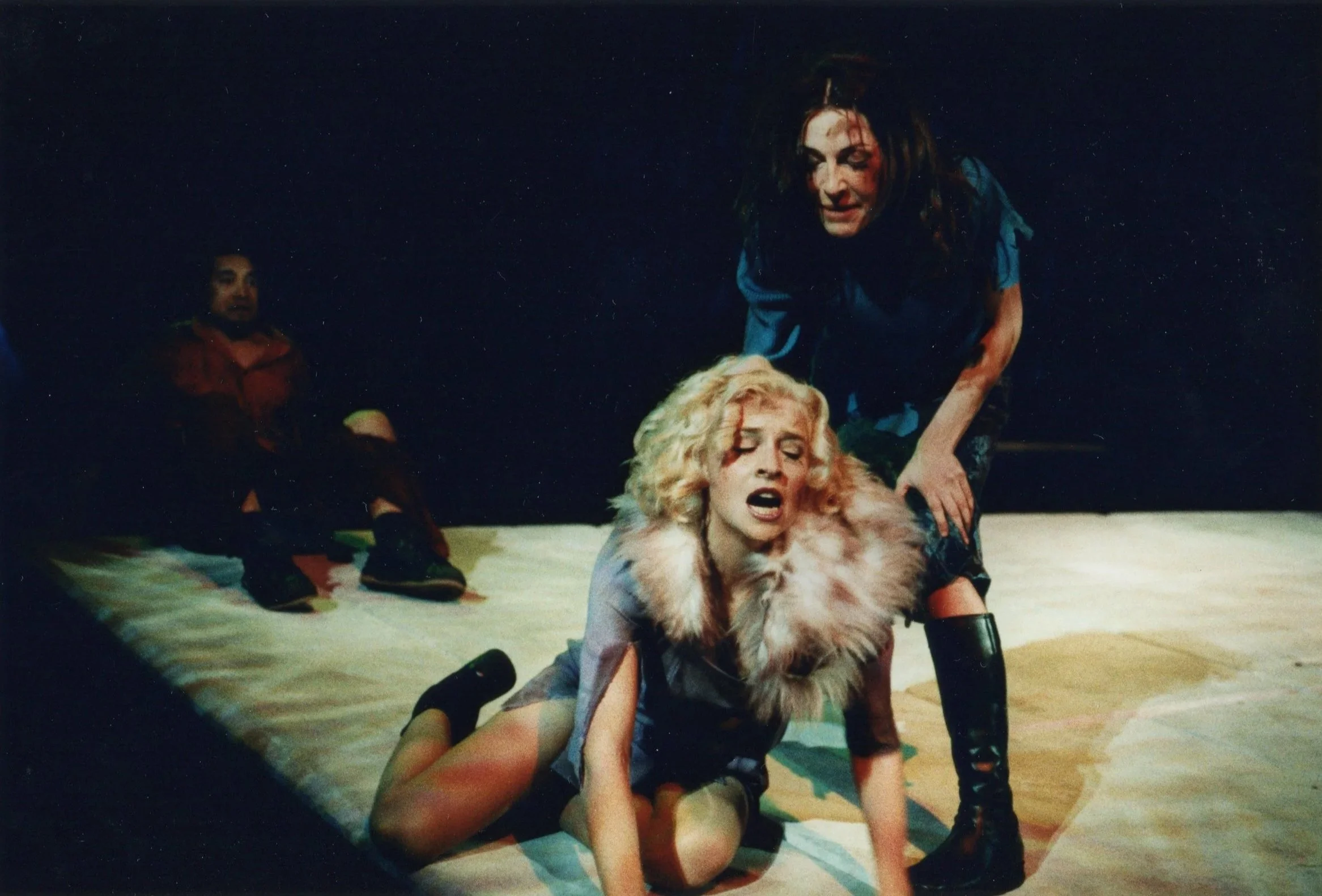
Iaheto Ah Hi, Tandi Wright and Ingrid Park
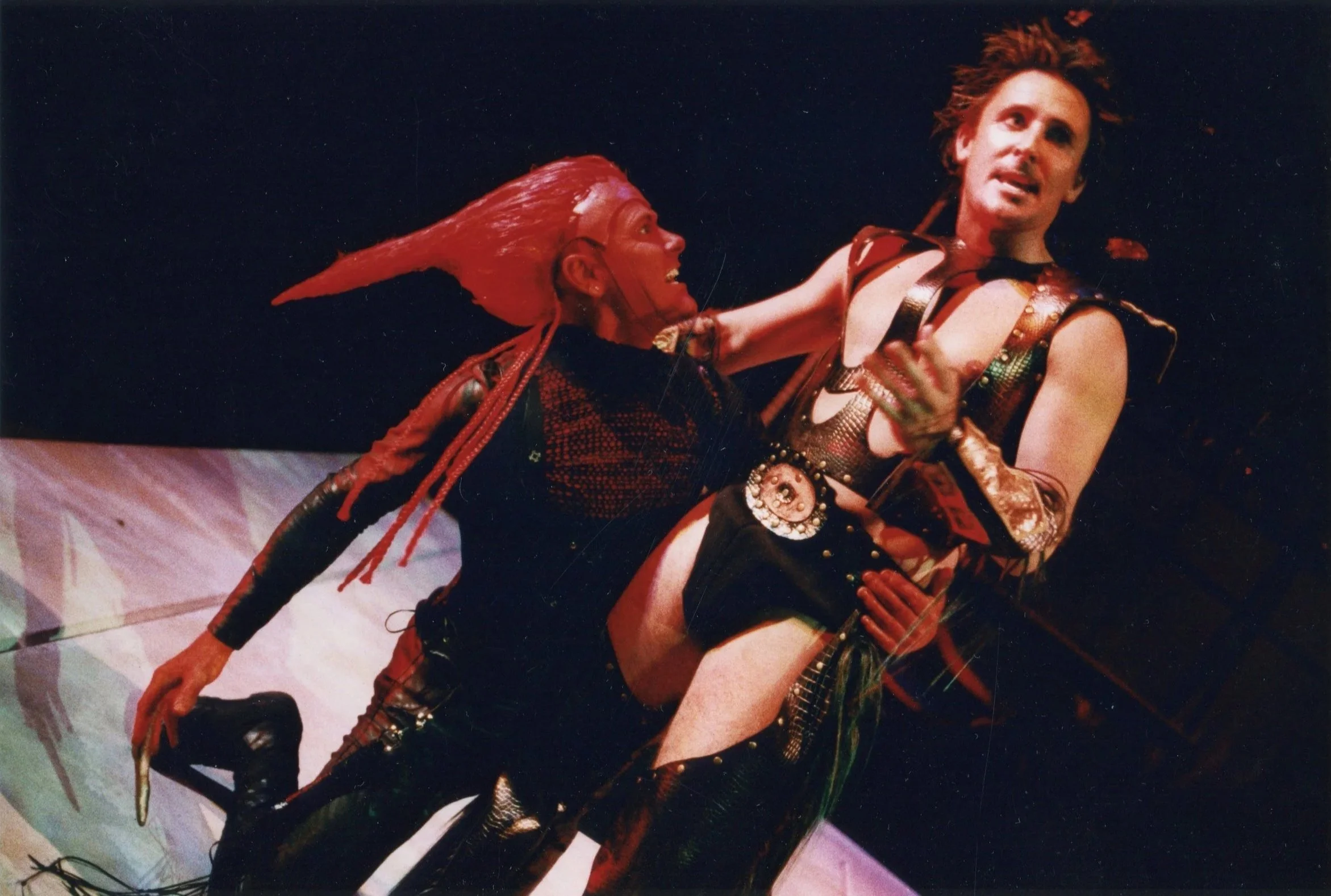
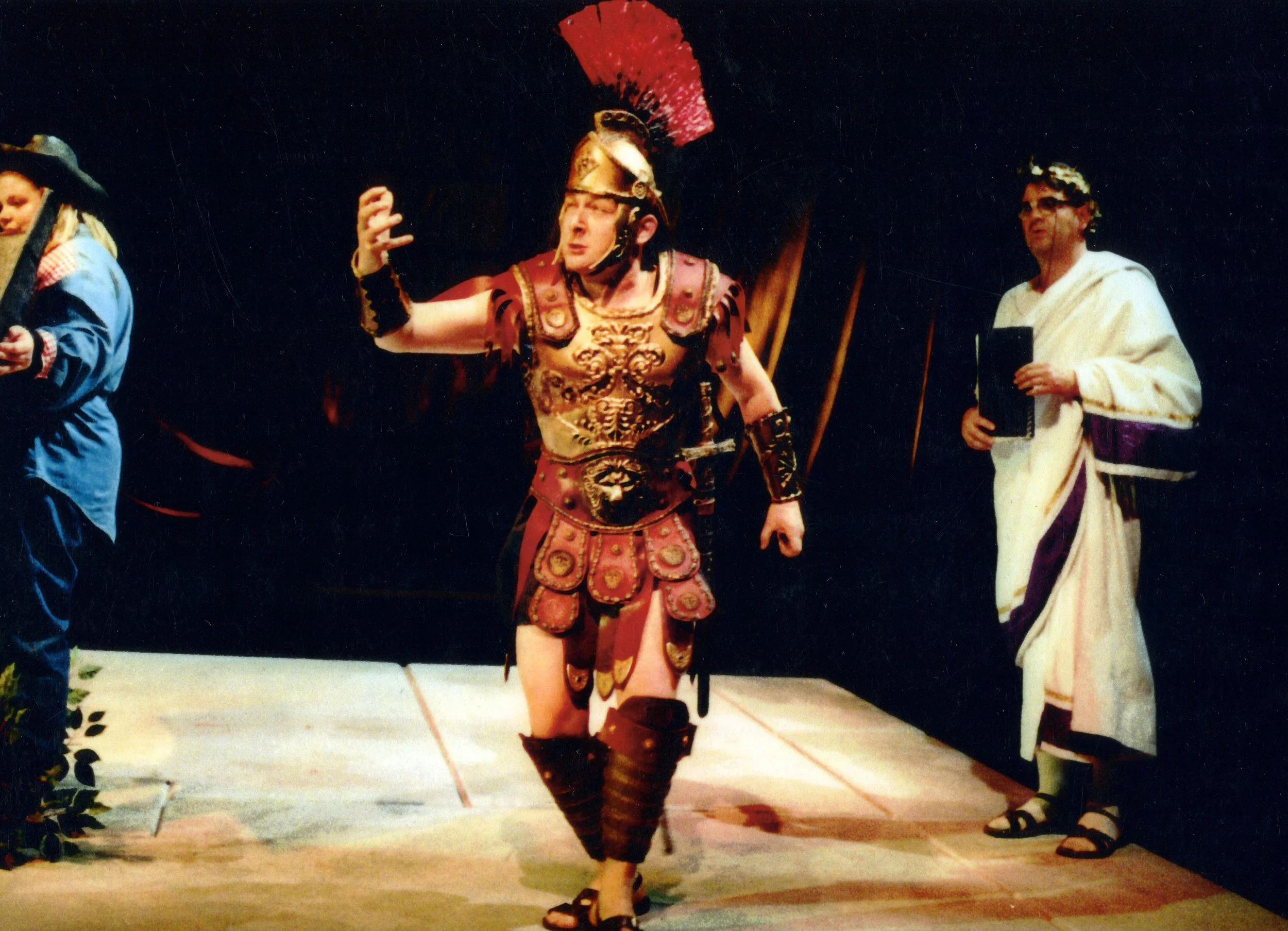
Stephen Lovatt and Tim Balme
Lucy Schmidt, Cameron Rhodes and Mark Wright
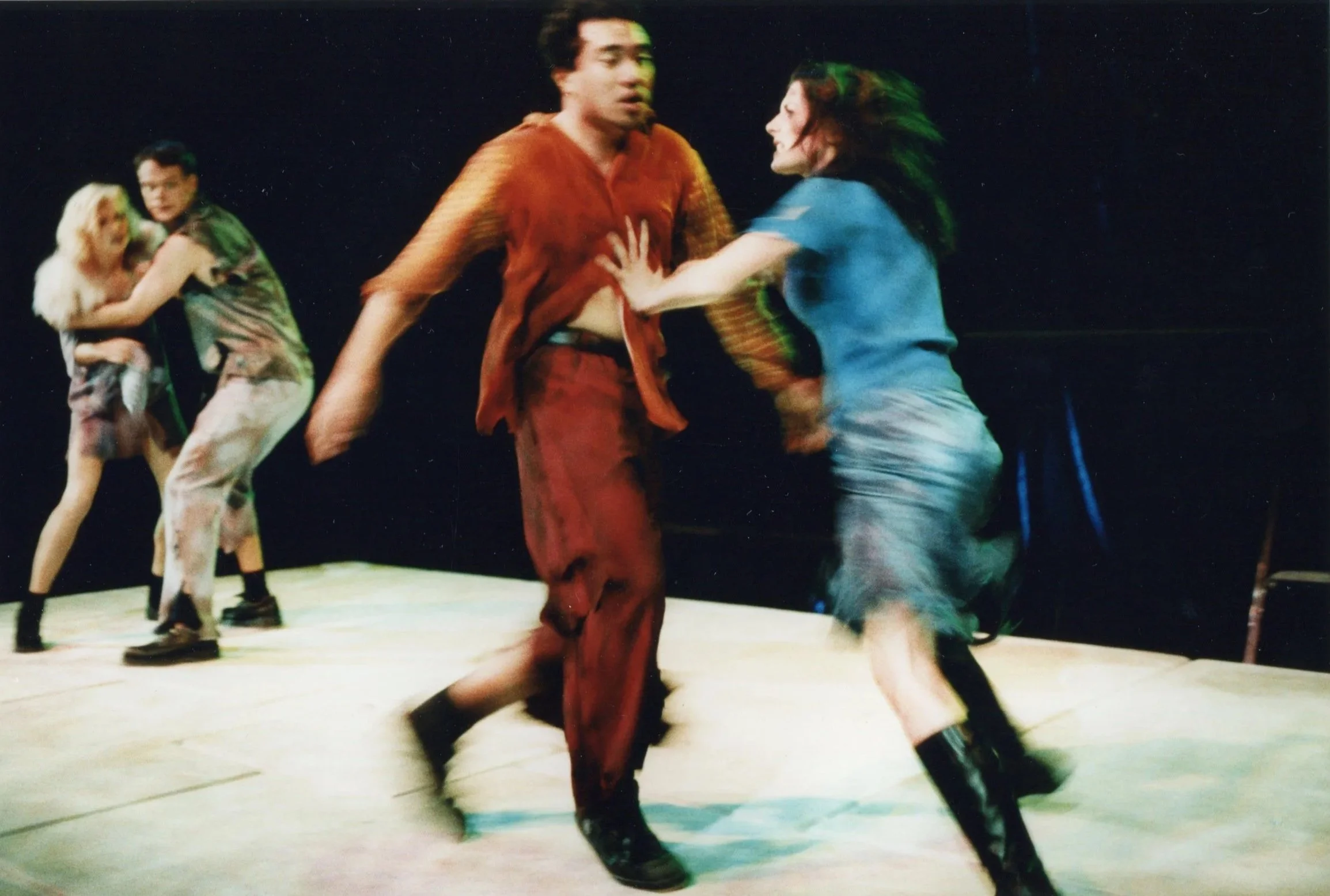
Tandi Wright, Andrew Smith, Iaheto Ah Hi and Ingrid Park
“Cameron Rhodes, playing Bottom playing Pyramus, takes ham acting to the level of genius.”
Ruth Hill, Hawke’s Bay Today, 18 August 2000
He “died a thousand deaths in the space of 30 seconds.”
DREAM IN PERFORMANCE
Edited highlights from the 2001 South Island tour, cut to original music by Victoria Kelly
WHAT STAYED WITH ME
Dream confirmed something I had been exploring for more than a decade.
Since Jism at BATS in 1989, I had been refining a way of making theatre that began with the text but treated everything around it — the actors, space, movement, music, design and the audience — as part of the same creative investigation.
The aim was never to impose a finished interpretation on the actors. It was to create the conditions in which they could discover the play together: rigorous enough to give the work shape, and open enough to allow informed improvisation, strong physical offers and deep character investigation.
A Midsummer Night's Dream was a particularly satisfying confirmation of that approach. Given the right ensemble, the right design and enough time to excavate the play, Shakespeare's text could become something immediate, physical and unpredictable without losing its complexity, clarity of language and thought.
The production didn't make me want to change my methodology. It made me trust it more.
Why this production still matters
TRUST ALLOWS RISK.
RISK-TAKING OPENS UP SURPRISING AND EXCELLENT WORK.
CREDITS
A Midsummer Night's Dream
by William Shakespeare
Director — Simon Bennett
Set Design — Mark McEntyre
Costume Design — Tracey Collins
Lighting Design — Bryan Caldwell
Choreography — Shona McCullagh (formal dance sequences)
Original Music — Victoria Kelly
2000 Cast
Tim Balme · Robyn Malcolm · Tandi Wright · Stephen Lovatt · Cameron Rhodes · Ingrid Park · Mark Wright · Iaheto Ahi · Lucy Schmidt · Anne Budd · Willy Plumb · Neil Duncan · Andrew Smith
2001 Revival
The South Island revival featured Katie Wolfe, Rebecca Hobbs, Jonathon Hendry and Tim Spite among the new cast.